
Petrol vs Diesel Cars in Snow Hill Areas: Which Performs Better?
Learn the key differences between petrol and diesel cars while driving in snowy hilly areas. Discover common problems, performance advantages, gear handling, torque, fuel freezing issues, and which vehicle performs better in snow conditions.
LEH LADAKH
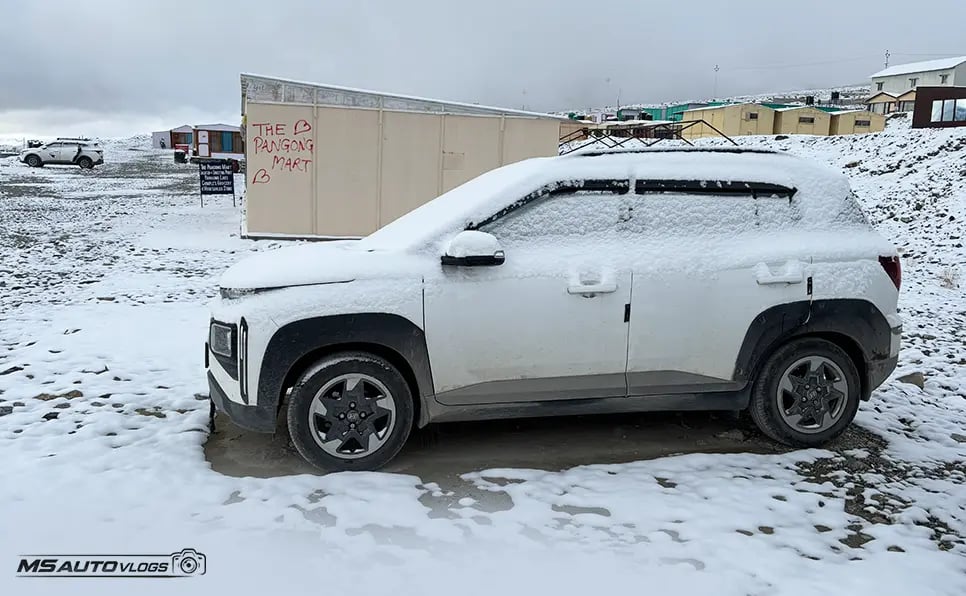
Driving in hilly areas during snowfall can be challenging for both petrol and diesel cars, but each type of vehicle behaves differently in such conditions.
1. Petrol Cars in Snowy Hilly Areas
Petrol cars generally drive smoothly on plains as well as hilly roads. However, while climbing steep slopes, drivers often need to shift to lower gears because petrol engines tend to lose pulling power in higher gears under heavy load. This means you constantly have to balance the gears and acceleration to maintain smooth driving.
Driving a non-4x4 petrol car on snow can be a bit difficult. Petrol engines are known for producing higher power, while diesel engines are known for torque. Because petrol cars generate power quickly, the wheels may spin faster on snowy roads, increasing the chances of slipping or losing traction.
One major advantage of petrol cars in extremely cold or sub-zero temperatures is that petrol fuel and fuel pumps usually do not freeze easily, even when the vehicle is parked overnight in snow-covered areas.
Lightweight petrol cars, such as the Maruti Suzuki Alto, can sometimes perform surprisingly well in snowy regions because of their compact size and lower body-to-weight ratio. Their lighter weight and small dimensions make them easier to maneuver on narrow mountain roads.
2. Diesel Cars in Snowy Hilly Areas
Diesel vehicles perform very well on snowy and hilly roads, especially when equipped with 4x4 systems. Their higher torque output helps them climb steep slopes more easily and maintain better control, even in higher gears.
Even non-4x4 diesel vehicles can perform strongly in snow. For example, the Force Traveller is often seen moving smoothly through snowy mountain roads while carrying many passengers and heavy loads. This is mainly because diesel engines provide strong low-end torque, which is extremely useful in difficult terrain.
However, diesel vehicles do have one common issue in extremely cold conditions. When parked overnight in freezing temperatures, diesel fuel and fuel pumps can sometimes freeze or become too thick to flow properly. To avoid this problem, drivers often use diesel anti-freeze or fuel de-freezer additives before parking the vehicle at night.
Overall, petrol cars offer smoother power delivery and better cold-start reliability, while diesel vehicles provide superior torque and better performance on steep, snow-covered roads, especially when carrying heavy loads.
If you enjoyed reading our blog, please share it with your family and friends. Don’t forget to explore more informative content on our website and subscribe to our YouTube channel for the latest updates and automotive news.
Connect with Us : msautovlogs@gmail.com
