CBG vs CNG: Key Differences, Benefits & Future of Green Fuels
Compare CBG vs CNG in terms of source, emissions, sustainability, cost, and performance. Learn why compressed biogas is becoming a leading green fuel solution for a cleaner future.
NEWS & UPDATES
Manish
6/4/2026
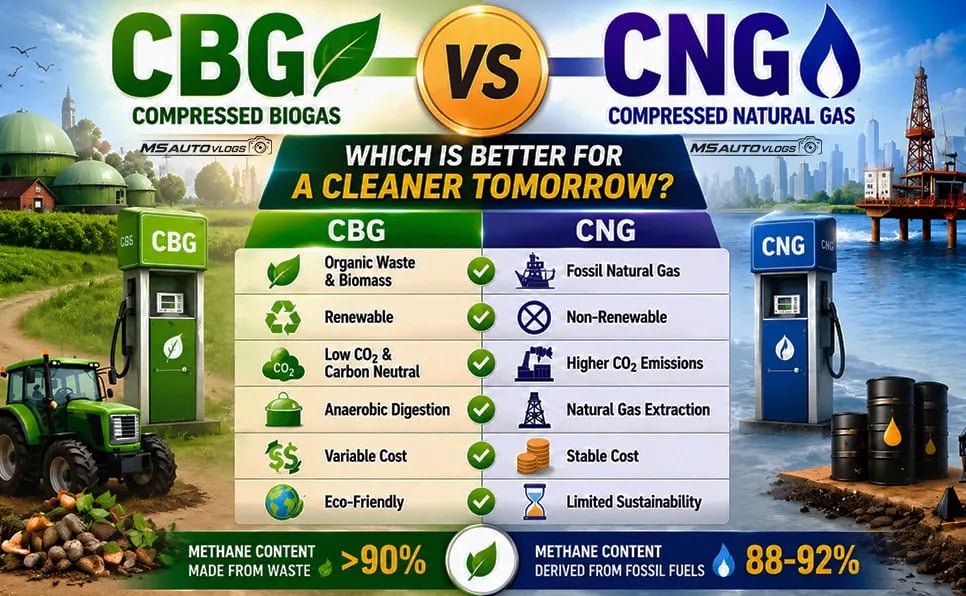
As the world moves toward cleaner and more sustainable energy sources, Compressed Biogas (CBG) and Compressed Natural Gas (CNG) are gaining attention as alternatives to conventional fuels. While both fuels primarily consist of methane and can be used in similar applications, their origins, environmental impact, and sustainability differ significantly.
What is CBG?
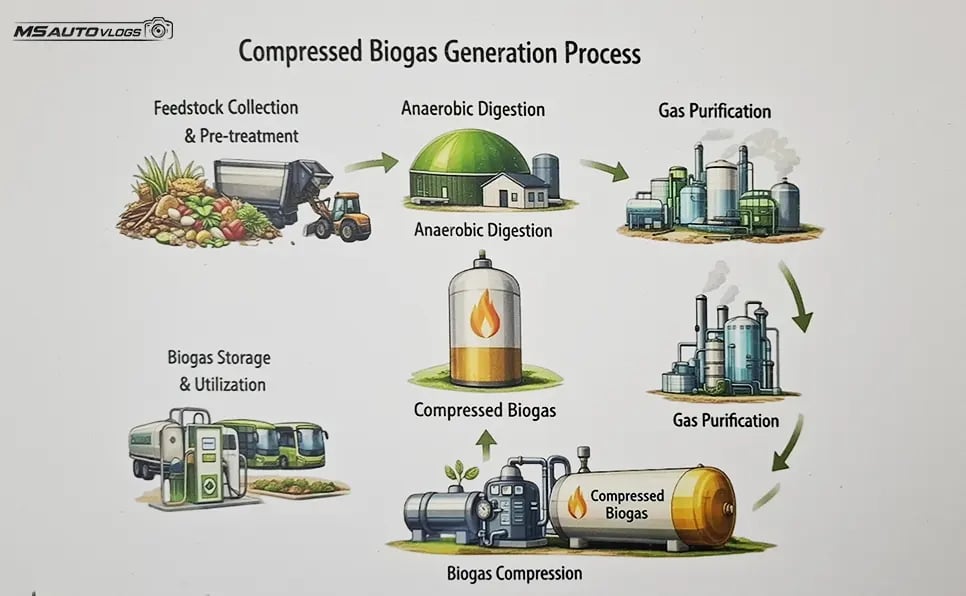
Compressed Biogas (CBG) is a renewable fuel produced from organic waste and biomass such as agricultural residues, food waste, animal manure, and municipal organic waste. Through a process called anaerobic digestion, microorganisms break down organic matter in the absence of oxygen, producing biogas that is purified and compressed into CBG.
Key Features of CBG:
Produced from organic waste and biomass
Renewable energy source
Low carbon footprint
Near carbon-neutral emissions
Supports waste management and circular economy
Methane content typically exceeds 90%
What is CNG?
Compressed Natural Gas (CNG) is derived from fossil-based natural gas extracted from underground reserves. It is compressed and used as a cleaner-burning alternative to petrol and diesel in vehicles and industrial applications.
Key Features of CNG:
Derived from fossil natural gas
Non-renewable resource
Higher carbon emissions compared to CBG
Dependent on natural gas extraction
Generally offers stable pricing
Methane content ranges between 88% and 92%ortation and sustainable energy.
CBG vs CNG: A Comparison
1. Source of Fuel
CBG is produced from renewable organic waste, while CNG is extracted from finite fossil fuel reserves.
2. Environmental Impact
CBG significantly reduces greenhouse gas emissions by converting waste into energy and preventing methane release into the atmosphere. CNG burns cleaner than traditional fossil fuels but still contributes to carbon emissions.
3. Sustainability
CBG supports a circular economy by turning waste into valuable energy. CNG, being fossil-fuel based, has limited long-term sustainability.
4. Production Process
CBG is generated through anaerobic digestion of organic matter. CNG requires extraction, processing, and transportation of natural gas from underground reservoirs.
5. Cost Considerations
CBG prices may vary depending on feedstock availability and production scale. CNG prices tend to be more stable but remain influenced by global energy markets.
6. Methane Quality
Both fuels contain high levels of methane, making them suitable for transportation and industrial applications. CBG often achieves methane purity above 90%, comparable to CNG.
Why CBG is Emerging as the Fuel of the Future
With increasing concerns about climate change, waste management, and energy security, CBG offers multiple advantages:
Reduces landfill waste
Lowers greenhouse gas emissions
Generates rural employment opportunities
Decreases dependence on imported fossil fuels
Supports national renewable energy goals
Governments worldwide are promoting biogas projects as part of their clean energy transition strategies.
Conclusion
Both CBG and CNG provide cleaner alternatives to conventional fuels, but CBG stands out as a renewable, eco-friendly, and sustainable option. By converting waste into energy, CBG not only powers vehicles and industries but also contributes to environmental protection and resource conservation. As infrastructure expands and production scales up, CBG is expected to play a major role in the future of green transportation and sustainable energy.